
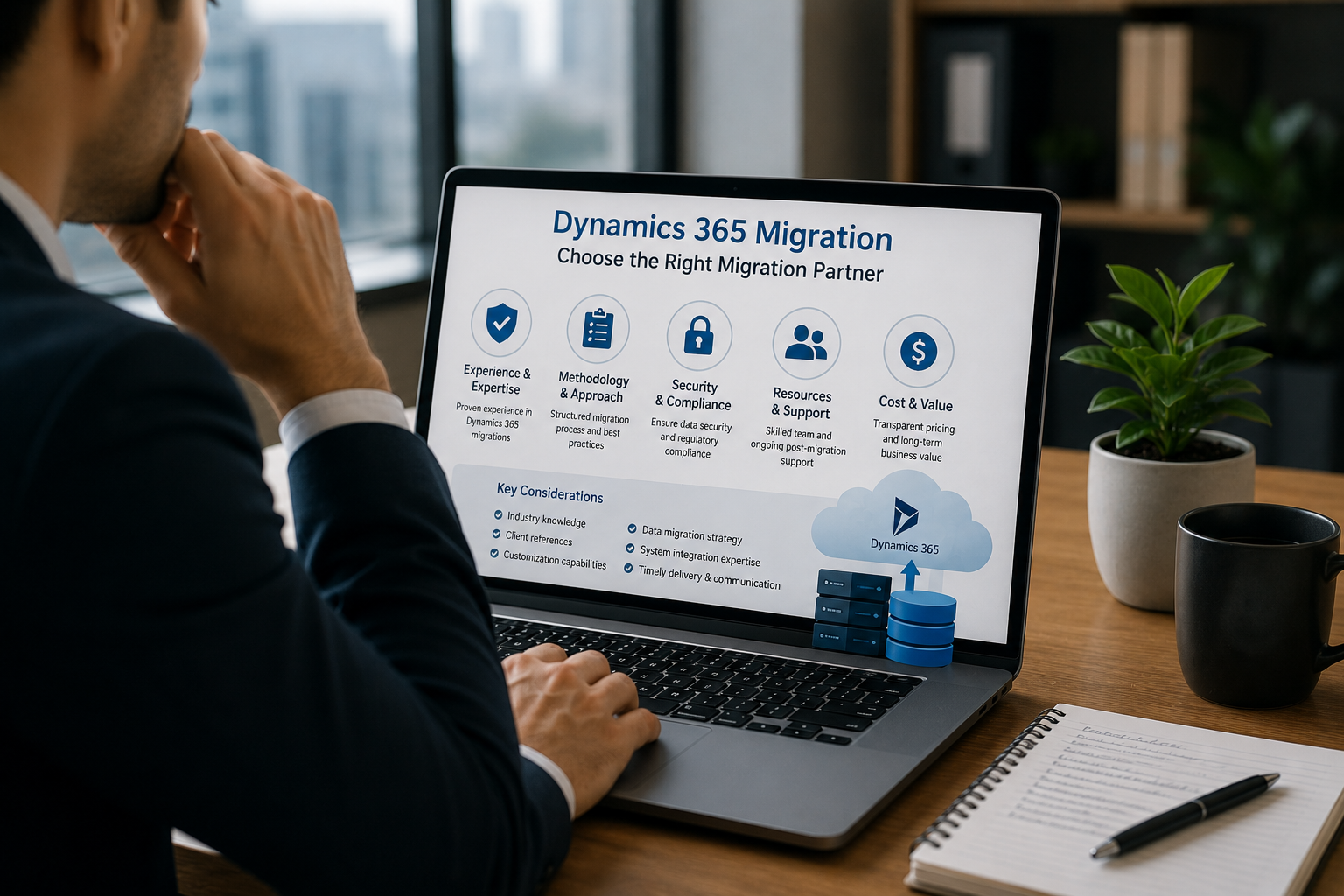
Migrating to a new business platform is rarely just a software upgrade. It often involves years of business data, critical financial records, customer information, operational workflows, and employee processes that cannot afford disruption. A poorly managed migration can lead to unexpected downtime, data inconsistencies, and costly delays, while a well-planned one creates a strong foundation for future growth.
For businesses across the UAE, where digital transformation continues to accelerate, selecting the right partner for dynamics 365 migration services is one of the most important decisions in the migration journey. The right provider does more than transfer data—they help ensure a smooth transition with minimal business interruption.
Understand Your Business Requirements First
Before evaluating migration providers, take time to understand your own objectives.
Ask questions such as:
- Which Microsoft Dynamics solution are you migrating from?
- Are you moving from an on-premises ERP or another cloud platform?
- Which departments will be affected?
- What customisations need to be preserved?
- What business challenges should the new system solve?
Having clear goals allows you to identify providers whose expertise matches your specific migration requirements rather than choosing solely on price.
Look for Proven Microsoft Dynamics Experience
Not every IT company specialises in Microsoft Dynamics migrations.
Reliable providers should have hands-on experience with Microsoft Dynamics 365 applications, including Business Central, Finance, Supply Chain Management, Sales, Customer Service, and related Microsoft technologies.
Ask potential partners about:
- Previous migration projects
- Industry experience
- Migration methodologies
- Technical certifications
- Customer success stories
Experienced providers understand common migration challenges and know how to avoid them before they affect your business.
Evaluate Their Data Migration Strategy
Business data is one of your organisation's most valuable assets. During migration, preserving its accuracy and integrity should be a top priority.
A professional migration provider will explain how they handle:
- Data assessment
- Data cleansing
- Duplicate record removal
- Data mapping
- Validation and testing
- Secure migration procedures
- Backup and rollback planning
Rather than simply copying existing records, they ensure your new Dynamics 365 environment starts with clean, organised, and reliable data.
Assess Their Project Management Approach
Successful migrations depend on structured planning as much as technical expertise.
Reliable dynamics 365 migration services providers typically follow a well-defined implementation process that includes:
Discovery and Assessment
Understanding current systems, workflows, integrations, and business objectives.
Migration Planning
Creating timelines, assigning responsibilities, identifying risks, and preparing contingency plans.
Testing
Running multiple validation tests before the live deployment to identify and resolve issues early.
Go-Live Support
Providing technical assistance during deployment to minimise operational disruption.
Post-Migration Optimisation
Helping users adapt to the new system while fine-tuning performance after implementation.
A transparent project plan demonstrates professionalism and builds confidence throughout the migration process.
Consider Industry Knowledge
Every industry has unique operational requirements.
For example:
- Retail businesses focus on inventory and sales integration.
- Manufacturing companies require production and supply chain management.
- Healthcare organisations prioritise compliance and secure patient data.
- Construction firms often manage multiple projects and procurement processes.
Choosing a provider familiar with your industry allows them to recommend practical solutions based on real-world experience rather than generic implementations.
Review Integration Capabilities
Modern businesses rarely operate using a single software platform.
Your Microsoft Dynamics 365 environment may need to integrate with:
- HR systems
- Payroll software
- CRM platforms
- Banking solutions
- E-commerce platforms
- Business intelligence tools
- Third-party applications
An experienced migration provider ensures these integrations continue functioning properly after migration while improving overall system efficiency.
Prioritise Security and Compliance
Migration involves transferring confidential financial and operational information.
Reliable providers follow strict security practices throughout every stage of the project.
Look for companies that implement:
- Secure data transfer methods
- Access controls
- Backup procedures
- Compliance with Microsoft best practices
- Risk management processes
For UAE businesses, maintaining data security and regulatory compliance is essential for protecting both business operations and customer trust.
Don't Overlook Training and Ongoing Support
Even the most successful migration requires employees to adapt to new workflows.
A dependable provider doesn't disappear after deployment.
Instead, they offer:
- User training
- Technical documentation
- Ongoing support
- System monitoring
- Performance optimisation
- Future upgrade assistance
This continued partnership helps organisations maximise their investment while reducing user frustration during the transition period.
Balance Cost with Long-Term Value
Choosing the lowest-priced provider may appear attractive initially, but migration quality has a direct impact on business continuity.
Instead of comparing quotations alone, evaluate the overall value each provider delivers.
Consider factors such as experience, technical expertise, implementation quality, support services, scalability, and customer satisfaction.
A reliable migration partner can prevent costly errors that far outweigh any short-term savings.
Conclusion
Moving to Microsoft Dynamics 365 is a significant milestone for any organisation. Success depends not only on the technology itself but also on selecting the right implementation partner. Reliable dynamics 365 migration services providers combine technical expertise, structured project management, industry knowledge, and ongoing support to deliver smooth, secure, and efficient migrations.
If your organisation is planning a Dynamics 365 migration, invest time in evaluating experienced providers who understand your business goals and can guide you through every stage of the process. The right partner will help you minimise risk, maximise efficiency, and position your business for long-term growth.
FAQs
1. What are Dynamics 365 migration services?
Dynamics 365 migration services involve transferring business data, applications, workflows, and processes from legacy systems or older Microsoft platforms to Microsoft Dynamics 365 while ensuring minimal disruption.
2. How long does a Dynamics 365 migration take?
The timeline depends on system complexity, data volume, customisations, integrations, and business requirements. Small projects may take a few weeks, while larger enterprise migrations can take several months.
3. Why is data cleansing important before migration?
.Data cleansing removes duplicate, outdated, and inaccurate records, ensuring that only high-quality information is migrated into the new Dynamics 365 environment
4. Should businesses choose a Microsoft-certified migration partner?
Yes. Microsoft-certified providers typically have proven technical expertise, implementation experience, and access to best practices that help ensure a smoother and more successful migration project.